The unfinished houses of Peru
I wrote this article in 2024 in Peru when traveling there
I arrived in Peru. Once you leave the center of Cusco, which boasts extraordinary colonial architecture, the rest of the city looks like a nuclear bomb hit it. Around 80% or 90% of the buildings are unfinished. Many are multi-story structures with exposed rebar sticking out of the top floor and unpainted facades missing their final layer of cement.
This is something many foreigners ask about upon arrival: Why aren’t the houses finished?
The answers Peruvians give vary, but the most frequent one is poverty. After speaking with many locals about this, I realized that for them, the situation is so natural that they don’t quite understand the foreigner’s surprise.
From my perspective (perhaps a euphemism for my own prejudices), the “it’s poverty” answer isn’t a satisfactory explanation. Let me explain. If a person has no money, they don’t build a three-story building and leave one unfinished. I can believe that some people might underestimate their budget when starting a project and have to leave it incomplete, but the sheer number of houses in this state proves that isn’t the explanation. Most people build this way on purpose.
To illustrate this better, a poor house looks like this:
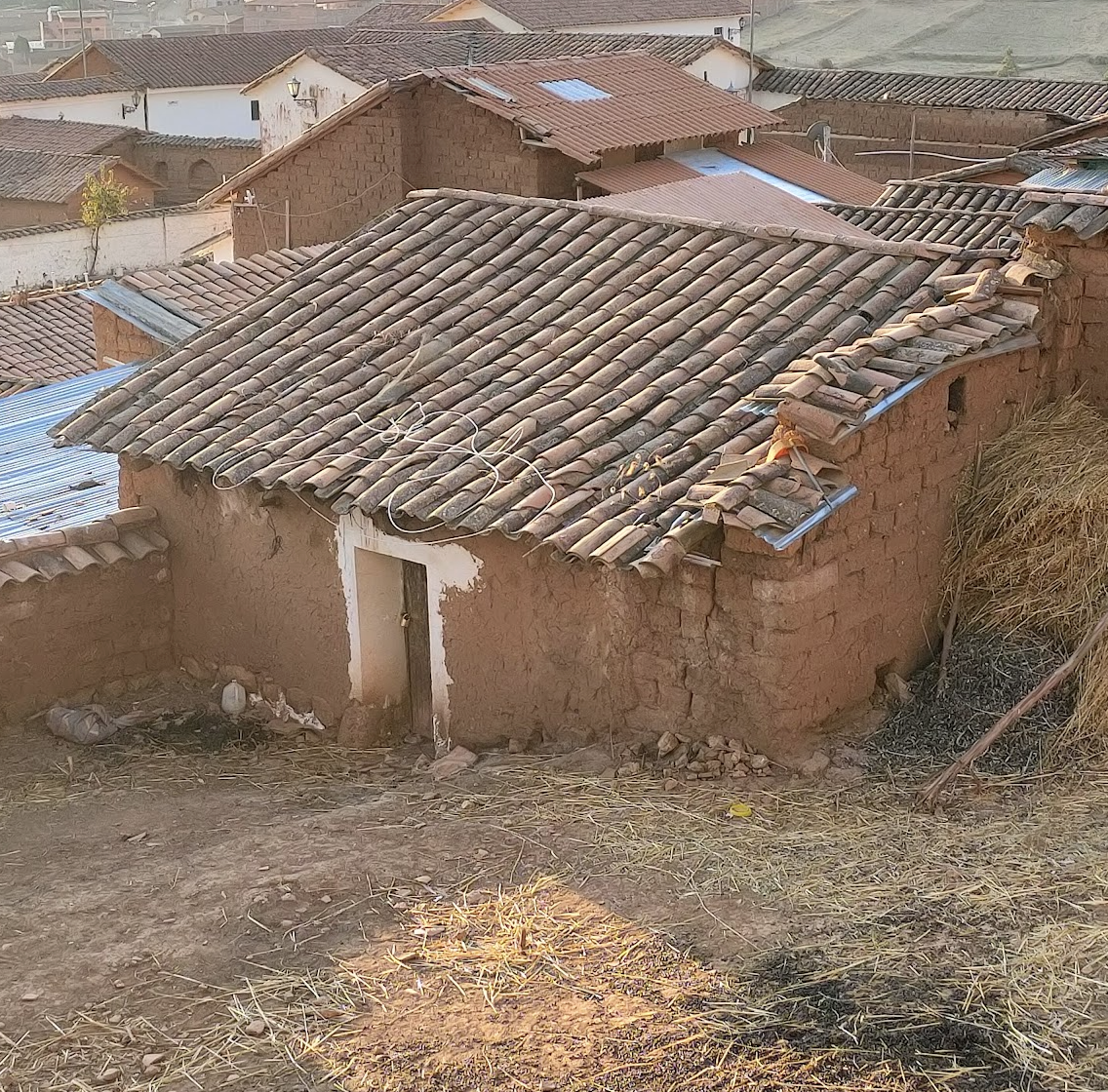
That is not what I am referring to. I am referring to a typical Peruvian house that looks like this:
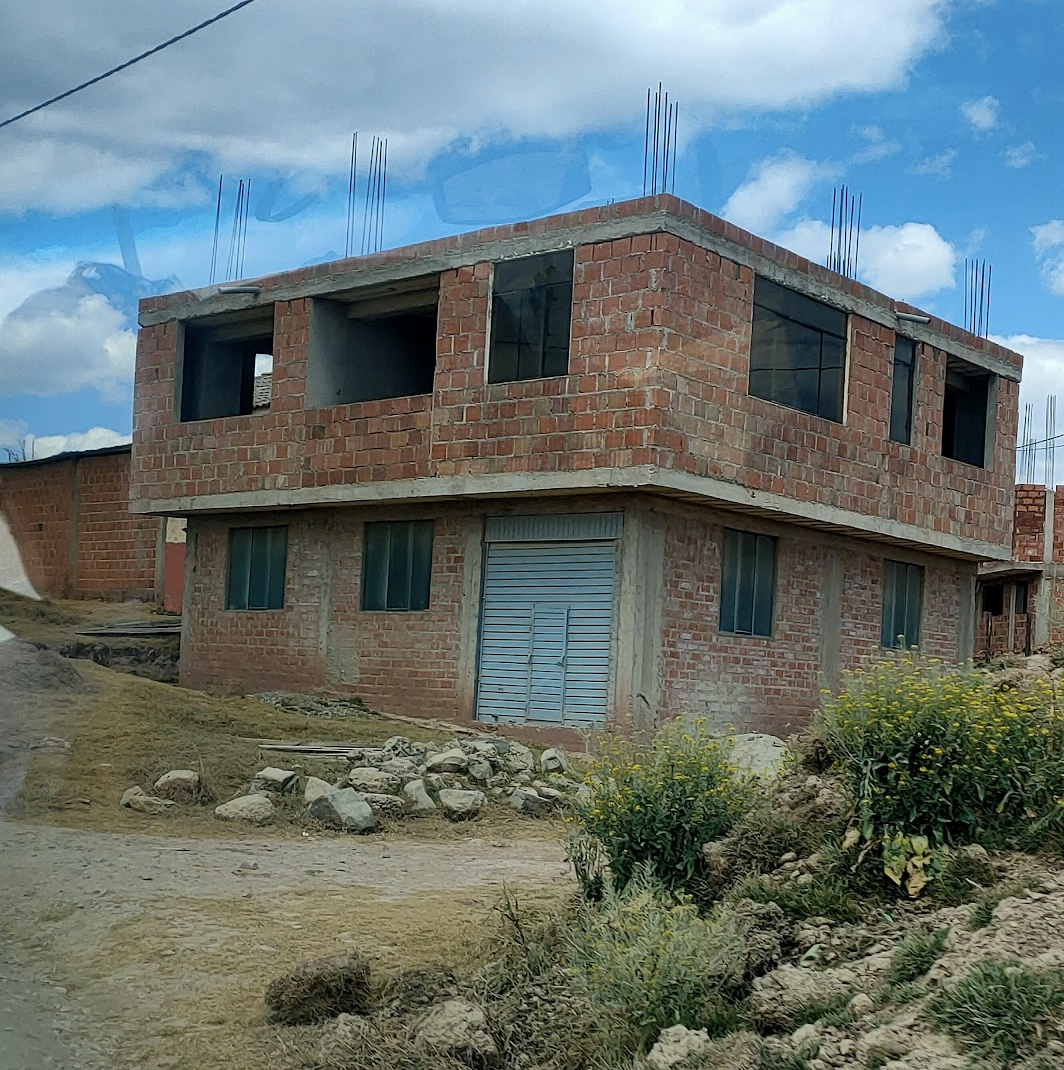
Therefore, poverty cannot be the only reason why people don’t finish building their homes.
Taxes for finishing the house?
One explanation that fits the data is that there is a tax on houses once they are completed. This would create a very strong incentive not to finish them. After following this lead for a long time, my conclusion is that while this tax is real (the so-called predial, which depends on the municipality), it is so small that it wouldn’t be enough to explain the observations. There has to be something else.
Complex Reasons
To understand the real reason, you have to dig deeper and, above all, let go of the preconceived ideas you bring from home. What is perfectly normal for us is not normal for Peruvians, and vice versa. This symmetric relationship is very important, and I will come back to this point later.
For clarity, I’ll summarize the main factors that explain this situation:
-
In Peru (as anywhere else), if you want to start a family, you look for a house. There are two ways to get one: buy it ready-made or build it from scratch.
-
Buying a ready-made house is tremendously expensive for most Peruvians.
-
Building from scratch is much cheaper than buying. This shouldn’t be surprising. Building materials and labor are not expensive.
-
To build a house from scratch, you first need to get some land. Doing this legally can be very complex, so most people simply look for a plot that isn’t built upon and resolve ownership through neighborhood agreements.
-
Once you have land, you can build in two ways: legally or illegally.
-
If you decide to build legally, you have to ask the municipality for permits (which are extremely expensive), hire an official architect, and so on. We will return to this point later. The result is that only about 10% of houses are built legally.
-
If you decide to build illegally, you hire a “maestro” (master builder) to do the work. You decide to invest all your savings (what else are you going to invest in?) and you also try to make it as big as possible because, in the future, you want extra space for relatives or to rent out. A house is an investment in the future.
-
If you ever want to regularize your house, you do it by bribing the official on duty, which is much cheaper than building legally. Having a perfectly finished house also signals that you have money to spare, which is not a good position for negotiating this bribe.
-
Building is so cheap that it costs more to put the final touches on your house (cement layer, paint, etc.) than to invade a new space and start the process again.
Is it cultural?
I think it is. Since almost everyone acts the same way, there is a certain inertia that leads people to copy others and absolutely no incentive to finish a house so it looks good. Doing so would make you stand out like someone painting a house fuchsia in one of the white villages of Cádiz.
Why don’t you get a loan to finish the house?
Several reasons, but the main one is that since almost everything is illegal, banks don’t grant loans because they have barely any guarantees of recovering them. Most Peruvians simply save what they can and invest it as soon as they can, distrusting anything that isn’t material and that they can’t physically control.
How do houses get water and electricity?
Currently, the government is responsible for this. Houses group together in neighborhood collectives and negotiate with the government to provide these services. It doesn’t matter that most are illegal because the government of the day has no capacity to refuse. There are so many illegal houses that they have no choice but to compromise or face a possible popular uprising.
The Surprise is Symmetric: The Case of Spain
One of the people I spoke to most about this (a builder) asked me questions about the situation in Spain. I found it hard to explain how things work there. Just as I couldn’t understand the unfinished houses, he couldn’t understand that people didn’t build them from scratch (which does happen, sure, but we all know it’s not the norm). Specifically, this person was surprised because:
-
People usually ask for a (huge) loan to access housing. 35-year mortgages have become normalized.
-
It is much harder to build illegally. You can run into serious problems if you do.
-
It is also very difficult to build legally.
-
Many people think it is crazy to allow new areas to be urbanized and leave it in the hands of individuals or private companies.
-
Many people do not want to understand, for ideological reasons, that houses get more expensive if you artificially limit construction.
-
People in Spain are starting to blame tourism. The economy in Cusco depends almost exclusively on tourism. Blaming your main source of income is like shooting yourself in the foot.
I don’t know which case is more absurd. The houses in Peru being built everywhere and unpainted, or the case of Spain (which we can extend to almost anywhere else in Europe), where people mortgage themselves for life to have something that, if the system allowed it, would be much cheaper and more accessible to everyone.
I also don’t know which situation is more desirable. In Peru, the urban landscape is horrible, but people get houses to live in. In Spain, regulations keep the landscape pretty (and I don’t even think they succeed at that), with a human cost that is hard to exaggerate, where the biggest losers are the poorest. Let this not serve as a trap to fall into a false dichotomy. The choice is not between Peru and Spain; other worlds are possible. It would be enough to take steps in the right direction, being aware that the starting point is not the same in different countries.
The Mystery of Capitalism
While I was investigating this topic, someone recommended an excellent book written by a Peruvian economist, Hernando de Soto, which garnered praise from both sides of the political spectrum. Titled The Mystery of Capital, it deals with how capitalism works in the West but fails in many other places.
This book explains that for most of history, construction has been done privately. The states that succeeded in creating legislation that helps people (and not one that actively harms them, turning them into de facto criminals forced to pay the cost of acting outside the state) were those that took people’s properties and incorporated them into a suitable legal framework. A legal framework that allows them to use their property and do with it what they think best, whether renting it, selling it, opening businesses, or living in it. This is a complex process that requires a judicial system with guarantees, an agile bureaucracy, and taxes that do not distort people’s real preferences.
Hernando de Soto has spent decades studying the problem of poverty at street level. To understand the difficulties facing the poorest population, he decided to do an economic experiment. First, he asked different lawyers how long it would take to open a business, and everyone (based on existing law) said it was a process of a few days. Second, with the help of a team of researchers, they opened a small business following legal channels (in Peru, with a single employee). To do this, a researcher had to:
- Work 6 hours a day
- For 289 days
- The cost of registration was $1,231, which was 31 times the minimum wage in Peru.
Another experiment was to build a house legally:
- It took 6 years and 11 months to obtain the land title.
- Obtaining the legal title to the land took a total of 728 steps.
- Obtaining the construction permit required 207 steps.
- They had to visit 52 government offices.
In Spain, property rights are administered infinitely better than in Peru, which in practice ends up in the worst of all worlds. In Peru, you don’t have a state that provides certain guarantees, but one that forces you to solve your problems outside of legality, with the cost that entails.
The Housing Problems in Spain
In Spain, the problems are numerous but of a different kind. For example, limits on construction are so strict that there is barely any high-rise construction and hardly any new areas are urbanized. This artificially limits the quantity of houses built and drives up the price of housing.
Urbanizing an area is presented as something incredibly complicated that must be done by a series of “wise men,” as if for most of history cities hadn’t grown naturally, including many of the most beautiful cities in the world. Building skyscrapers, which would allow for increased population density in big cities, is presented as something almost impossible and crazy, taking decades, as if the Empire State Building hadn’t been built over 100 years ago in little more than a year.
There is also a general climate of insecurity, with a serious squatting problem (okupación) that helps neither the owners nor the most disadvantaged groups. The solutions seem to only be able to come from active government action, when in reality the government is mainly responsible for the lack of a buoyant market for construction, urbanization, and transport.
Allow industries to build more. Allow people to decide for themselves what they want to do with their property and let them do it with guarantees. Allow competition from transport companies, which will open up new areas to build in. The request is simple and humble. It is the same one Diogenes made to Alexander the Great: Stand a little less between me and the sun.
The most tragic thing about this whole affair is that the measures frequently discussed to solve the housing problem (rent control, banning tourist apartments, creating new housing through subsidies) do not aim to solve the problem but to appease people who, for ideological reasons, prefer not to understand how the system works. Paraphrasing Hernando de Soto, the true enemy of progress is not the left or the right, but the status quo.
A Final Reflection
It is just as important to have a state that guarantees certain rules (compliance with free contracts between people, private property rights, security) as it is to ensure that the rules and regulations do not hinder the free action of individuals to carry out their life projects in the most appropriate way possible.
In both Peru and Spain, for different reasons, this is achievable, but it will depend on taking steps in the right direction. Currently, at least in Spain, we are going in exactly the opposite direction. Whether there is a change of course will depend mainly on a large number of people abandoning their prejudices and understanding that progress happens not by defending a tribe, but by facing problems objectively, making honest calculations of costs and benefits, and making the right decisions.