A comic of Polyphemus
Today I have been doing something I had been waiting to do for a long time: a comic using AI. A few weeks ago I did my first tests and realized that the new advances in AI image generation we have seen in the last months already allow the user to create quite consistent characters and have fine control over the content of the images. If everything goes as planned, my intention is to use the comic format to tell more complicated stories (both fiction and non-fiction).
I have to give a talk about the evolution of folklore tales quite soon, in which I wanted to use the example of Polyphemus as a story that has evolved and mutated for thousands of years. My slides would certainly benefit from having images for different parts of the story, so I thought I could kill two birds with one stone and use this as an excuse to work on a comic of the story of Ulysses and Polyphemus. I have been trying and failing for a few good hours and this is what I have learnt so far:
The 95% trap
The AI (I use both Gemini and ChatGPT) makes images that are about 95% there. However, getting the last 5% is incredibly difficult sometimes. For example, I was trying to have a good image of the blinded cyclops trying to find Ulysses, who is hiding below a big black ram. This is what I get:
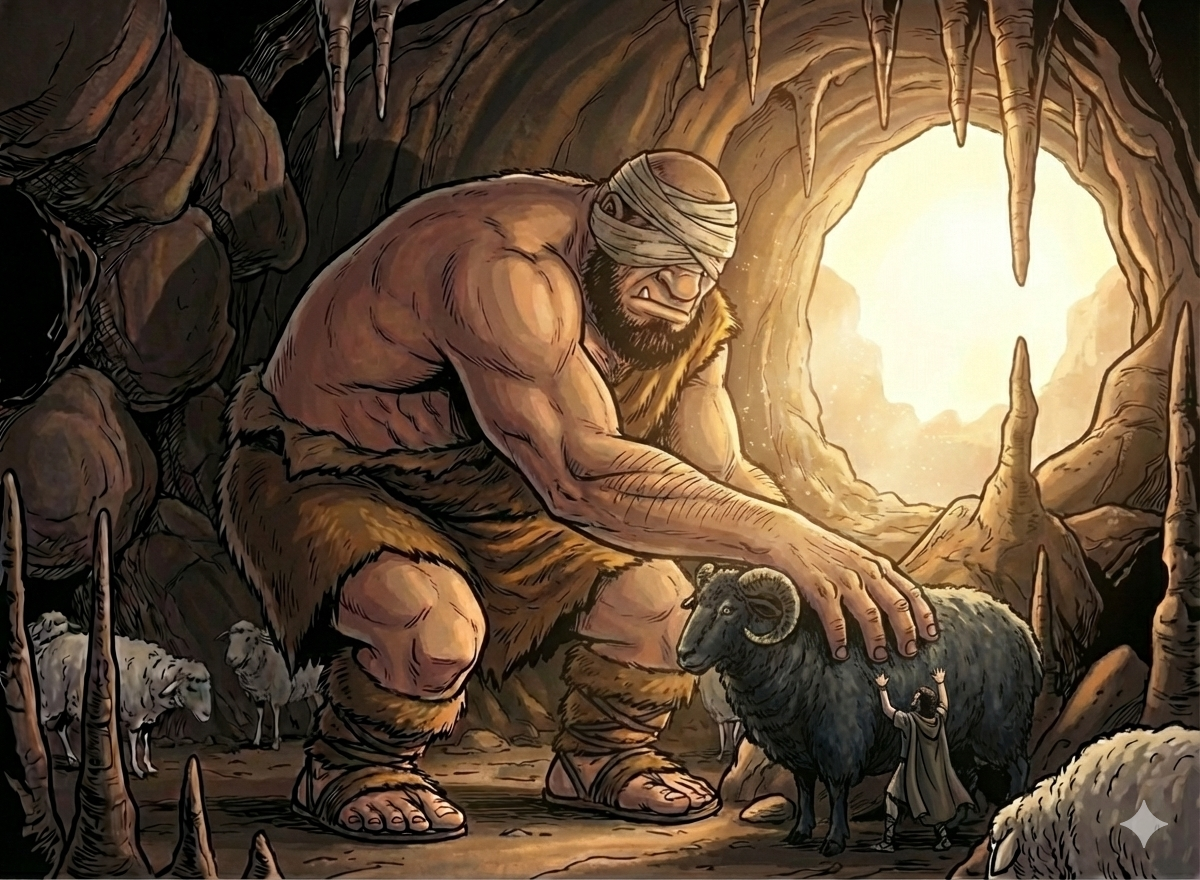
Style-wise it is pretty good. I like the color palette and the level of detail. However:
- The size of Ulysses (or the ram) is just wrong. Either you make Ulysses bigger or you make the ram smaller (depending on the scale you want for Polyphemus)
- Ulysses is not hanging below the ram
- Ulysses was not consistent with the character I was drawing before in other panels
- I do not like the composition of the image. The ram should be heading towards the exit of the cave, along with other goats. Right now he is just standing there with a silly face
You could think, well, explain those changes, let the AI work its magic and case closed! Well, not so fast. So far, what I see happening is:
- Some changes are accepted and easily made. The changes that normally work better are those that imply some minor local correction: e.g. replacing a spear with a torch.
- Some changes are ignored: For some reason, the prompt is accepted, a new image is generated but the instructions are simply ignored and the image looks exactly as before. I have seen this many times when you want to change significant things in the image, such as the size of an object, the perspective or the composition.
- Sometimes most of the instructions are ignored and you get something quite different from what you asked for. For example, when I tried to correct the image above, the next resulting image was:
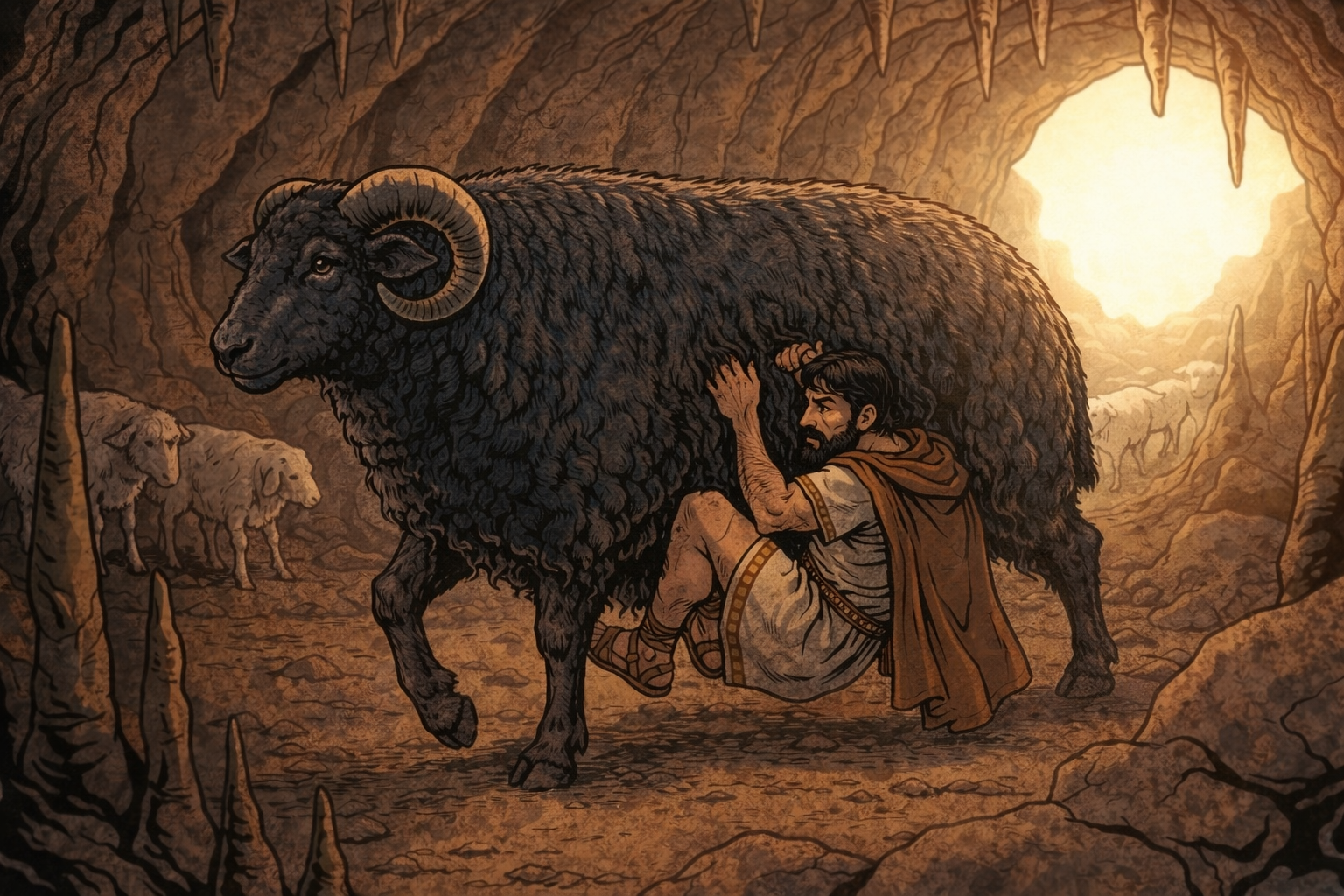
All right. Here I have Ulysses hanging from the ram, more or less correctly. The size seems to be about ok (though the ram is too large probably). However, Polyphemus is gone! It also ignored my instructions regarding the orientation of the ram (he should be facing the exit). Well, you can just… ask that, correct? That’s what I did: I asked for the ram to be facing the exit and for Polyphemus to be included in the image.
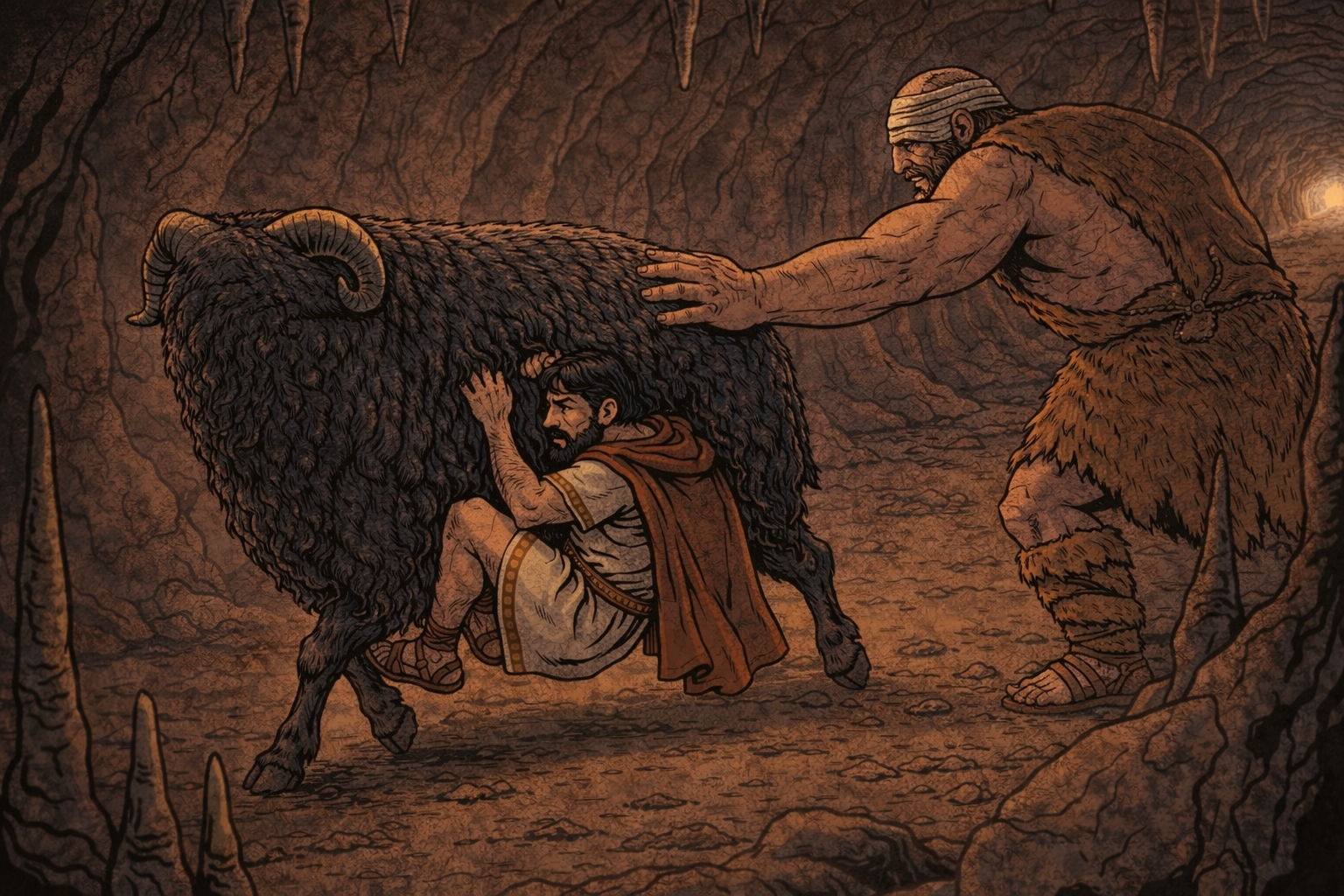
Oh geez. Now I have a headless ram, a Polyphemus who has normal eyes and a bandage over his forehead, and who is not even that big. Everything is wrong with this image. As you can see, it really tries to preserve as much as possible from the previous image—in this case, too much.
In cases like this, you are tempted to start a new chat window from scratch and try again. This might work, but most of the time the same thing happens… you are 95% there, but the missing 5% is wrong, and now it is a different kind of wrong. For example, starting afresh gave me this:
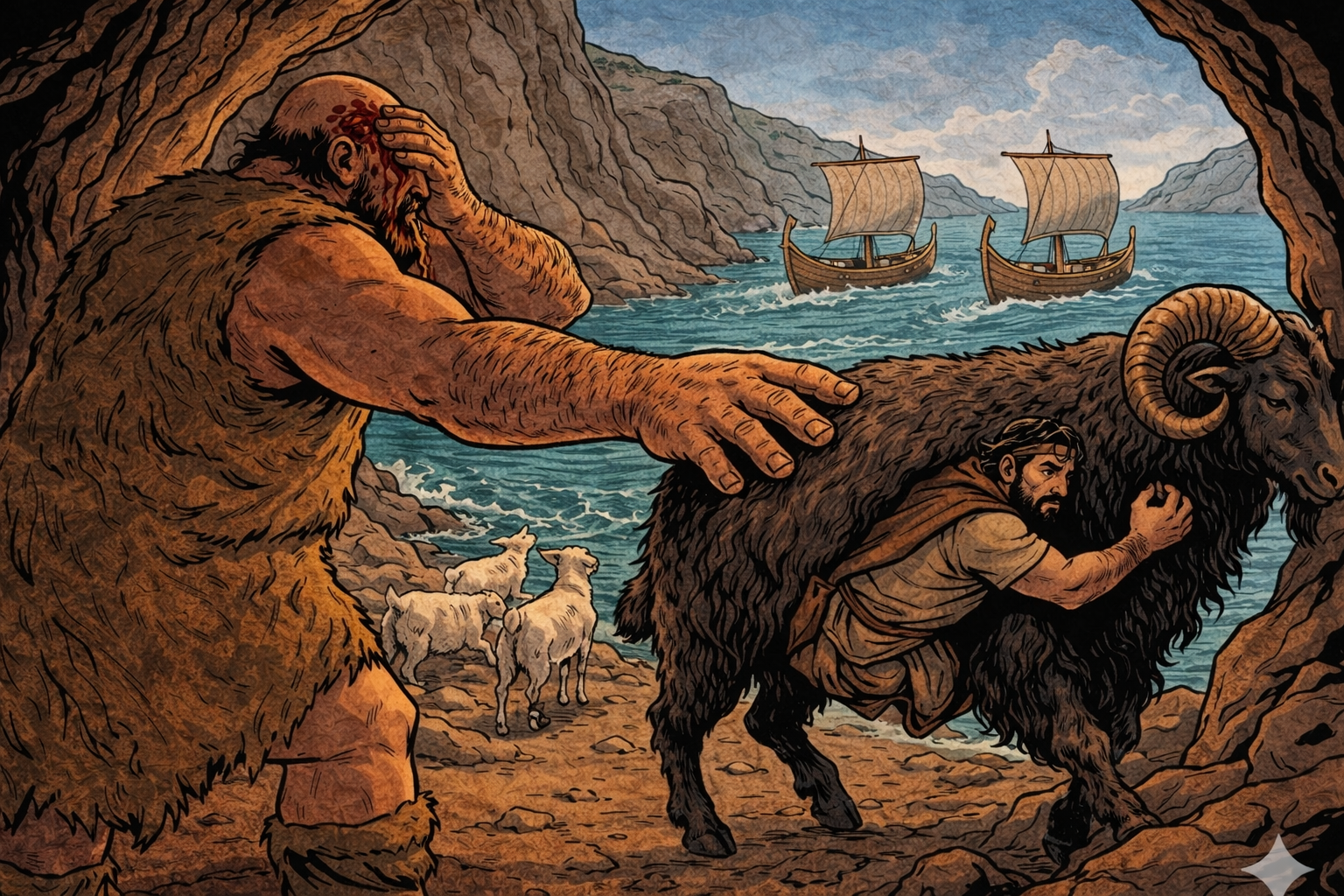
Here the background is strange. I don’t want the boats to be visible in the frame (in fact, I did not mention anything about boats whatsoever!) And if there were, there should be one single boat, not two. The cyclops is not a cyclops anymore, just a big guy with a splash of blood. The sizes of Ulysses and the ram seem correct, though it is not totally clear to me where his legs are. The composition is also just wrong… The ram seems to be heading in the wrong direction.
Maybe I should try again from scratch?
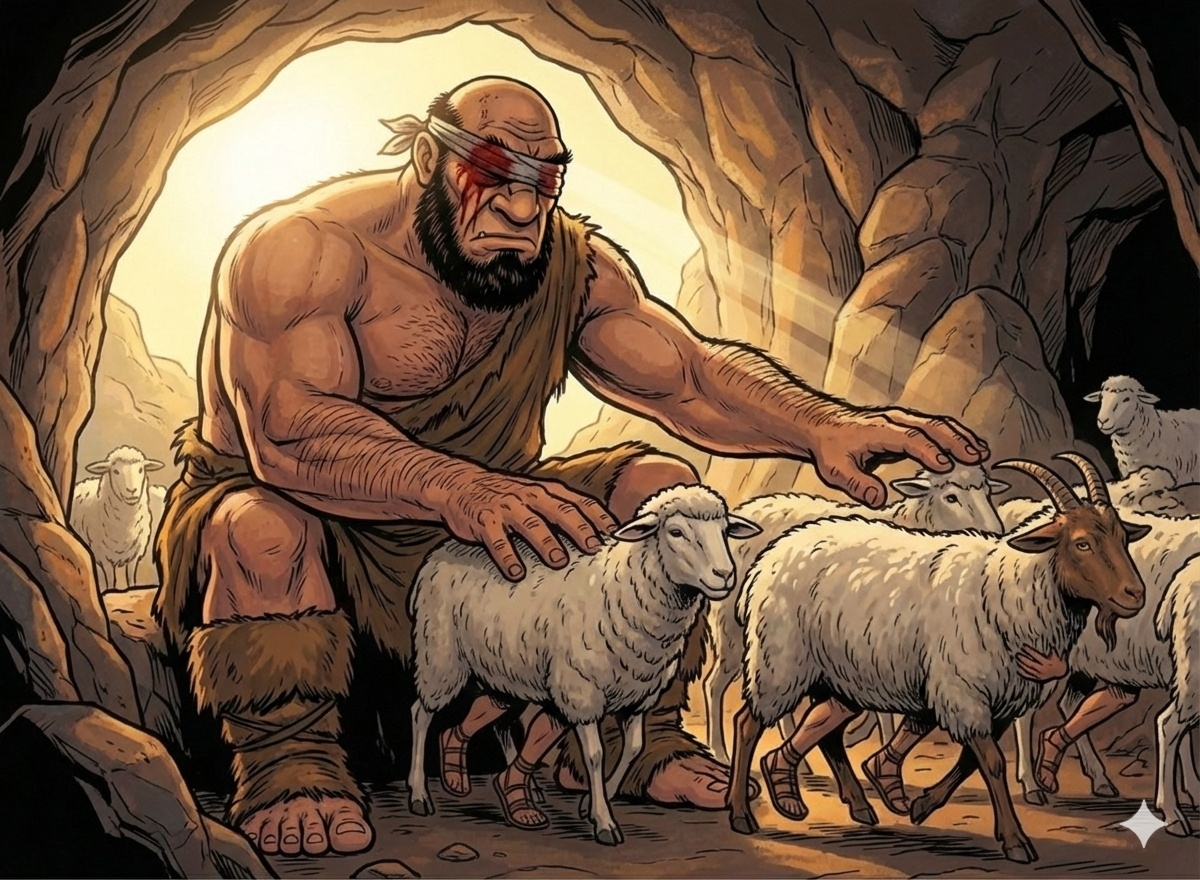
I like the style of this one, and it is consistent with other images I had. But again, here we have the problem of the goats facing the interior of the cave. The cyclops has the right size but now he has two eyes. And the legs and hands of Ulysses’ crew, well, they just come from unexpected places. There were many iterations like this and for some reason I could not get exactly what I wanted, so I gave up for the day.
Sketching is the way
But not everything was an endless loop of failures. Some tricks did work. This is a sketch I drew in a couple of minutes showing Ulysses holding a torch, facing Polyphemus. As you can see, I am not a great artist, but in my defense, I haven’t drawn in many years. It was an activity I loved as a kid and I did it quite consistently until I was 15 or so, but in the last 20 years I haven’t done it much. Maybe it is time to start again!
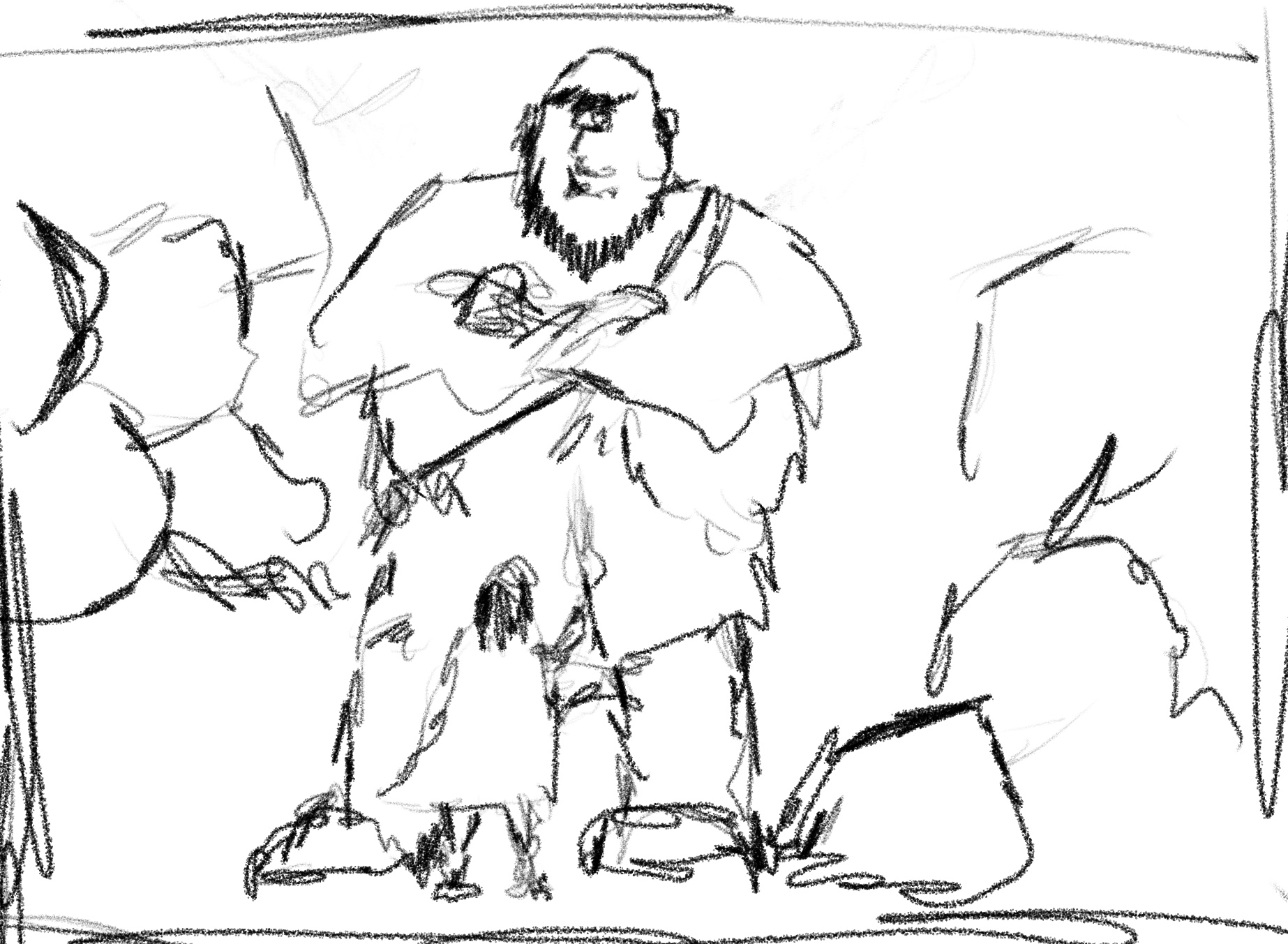
From this sketch, Gemini was capable of imagining this:
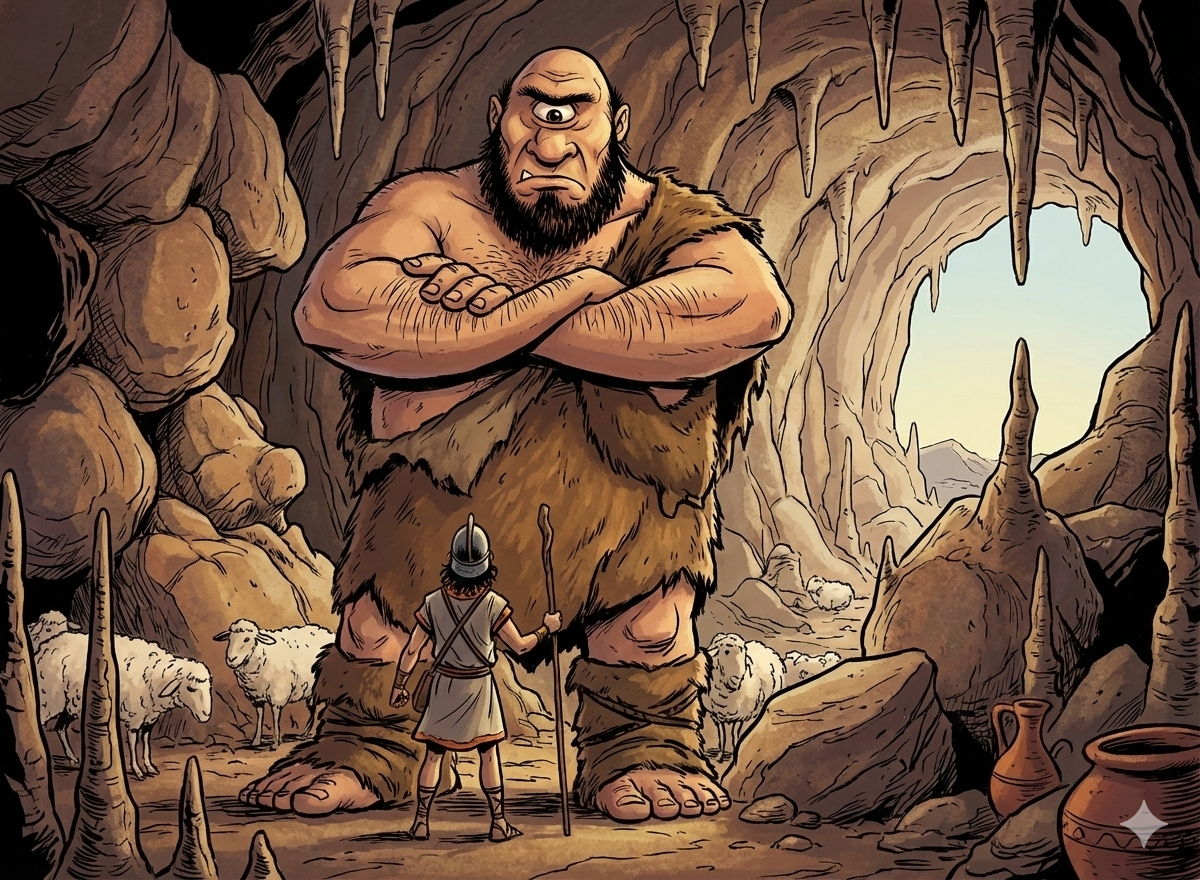 A menacing Polyphemus facing Ulysses
I did tell him the context, and that was useful because it added some roaming sheep and some pottery. The image is 95% there but the remaining things to correct, the missing 5%, are mostly local changes.
- I wanted Ulysses to wear specific attire with a cloak, and to carry no staff. I did not want him to wear a helmet
- I wanted the entrance of the cave to be closed off by a boulder
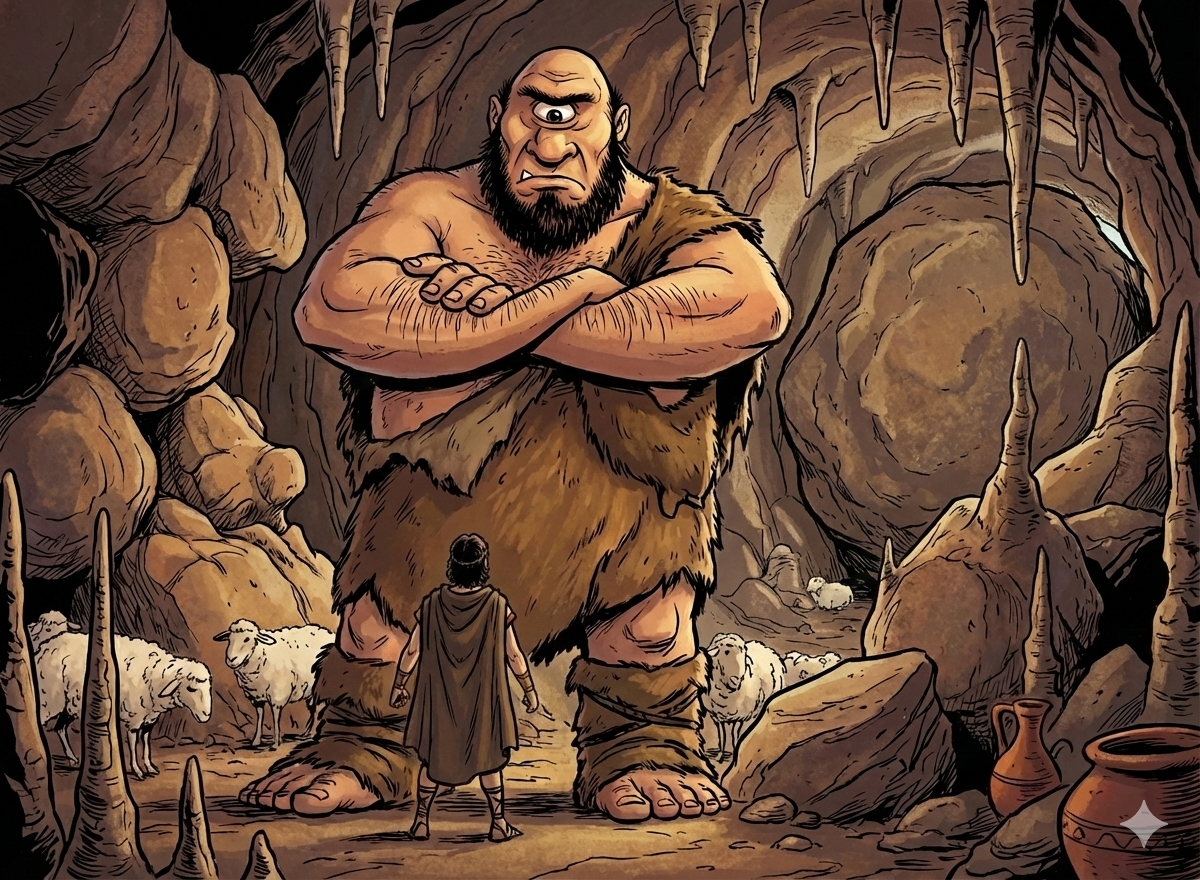 As you can see, as the changes are very specific and do not imply big changes in the composition, Gemini was obedient and the modifications were perfect! But we had to go one extra step. The lighting of the cave now does not make sense. So I gave Ulysses a torch and instructed Gemini to adapt the colors to the new lighting conditions. This is the end result:
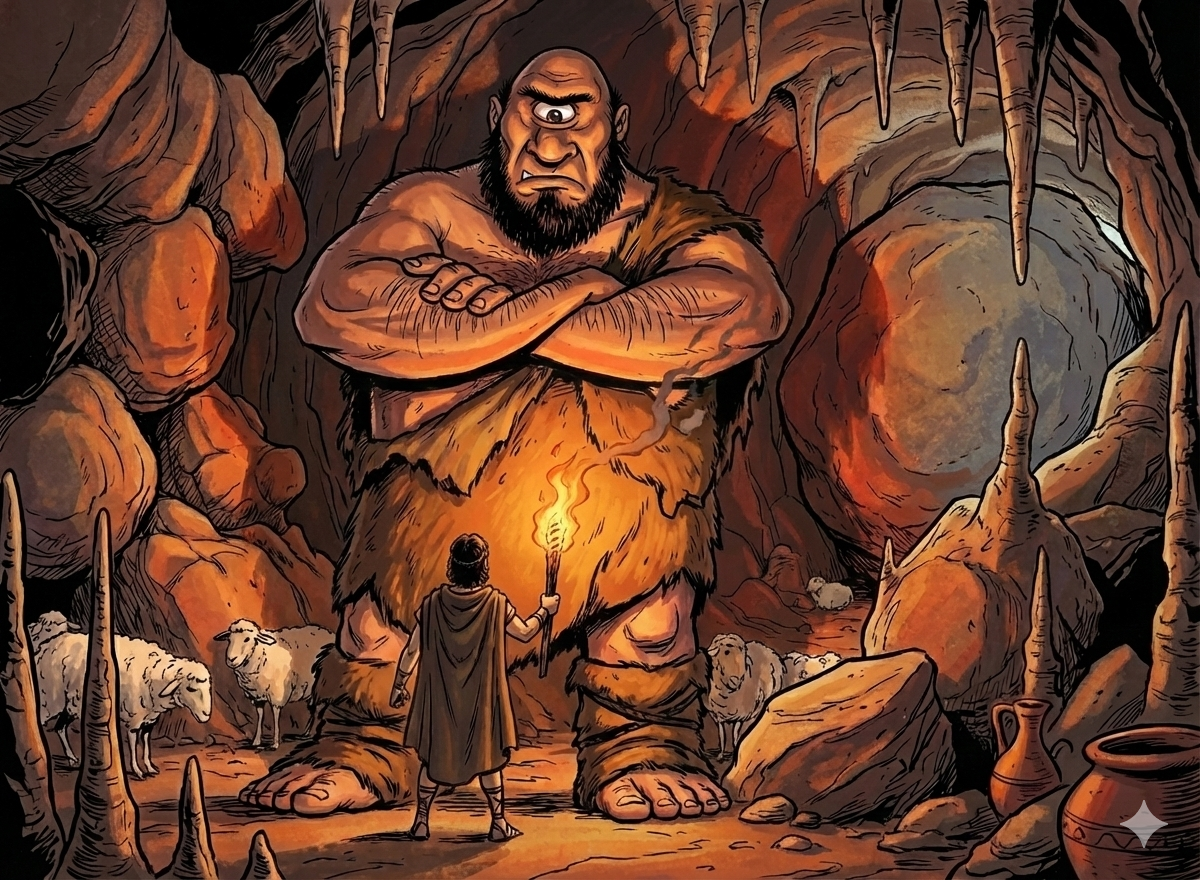 The final image of the encounter between Ulysses and Polyphemus
Sometimes, prompting alone works
Sometimes, you do not need to do the sketching, and just describing the image works. I do add previous images I have generated and I like so that the AI can have a reference. For example, I liked this image of Ulysses offering the strong wine to Polyphemus.
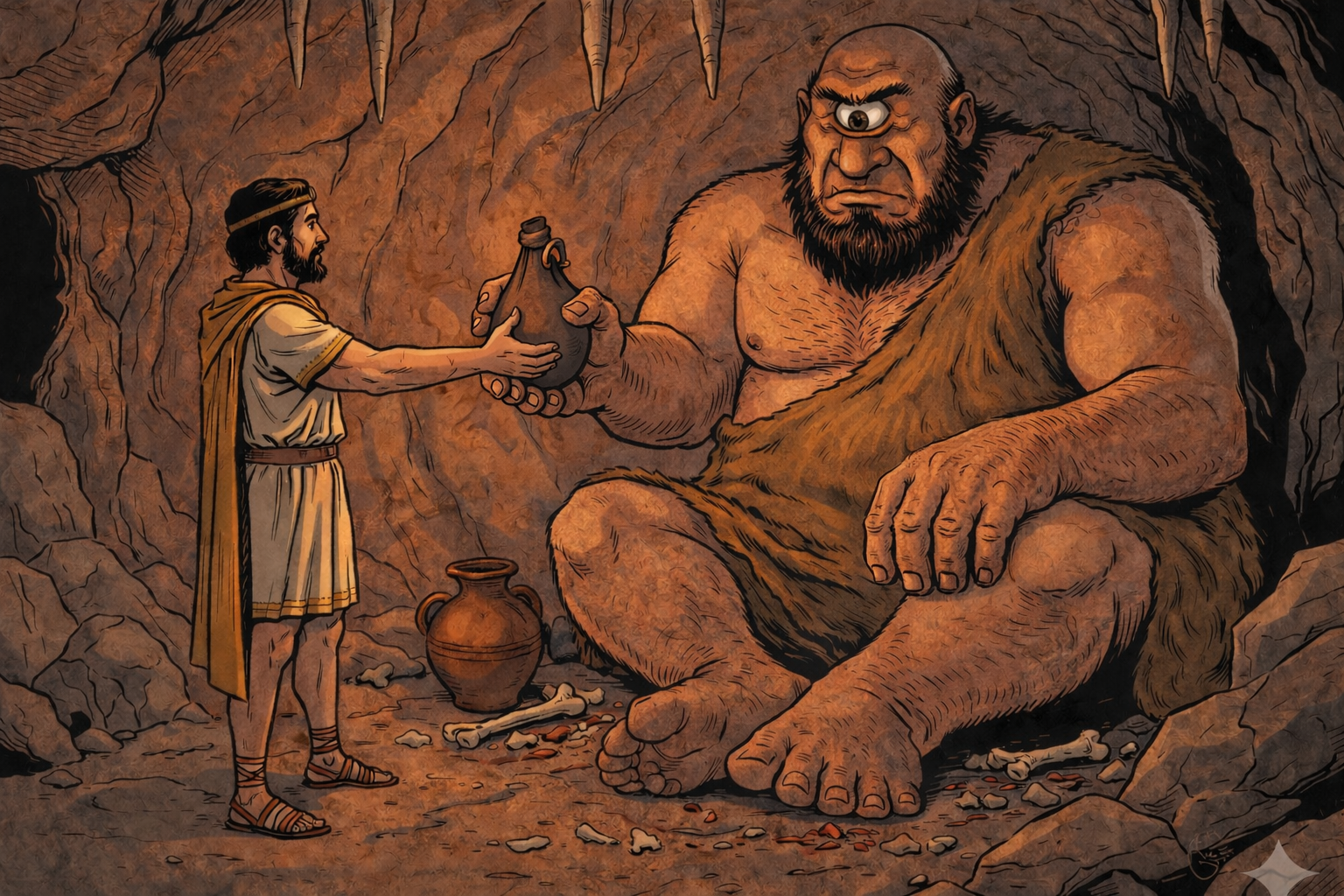
Character consistency is very good (of course, there are some minor details to improve, but overall I give it a pass). You need to pay close attention to details to notice the differences with the characters in the previous panel.
An uncensored pleasant surprise
Using ChatGPT I managed to obtain this picture (without using any sketch, just prompting) of Ulysses and his mates shoving the big stake into the cyclops’ giant eye:
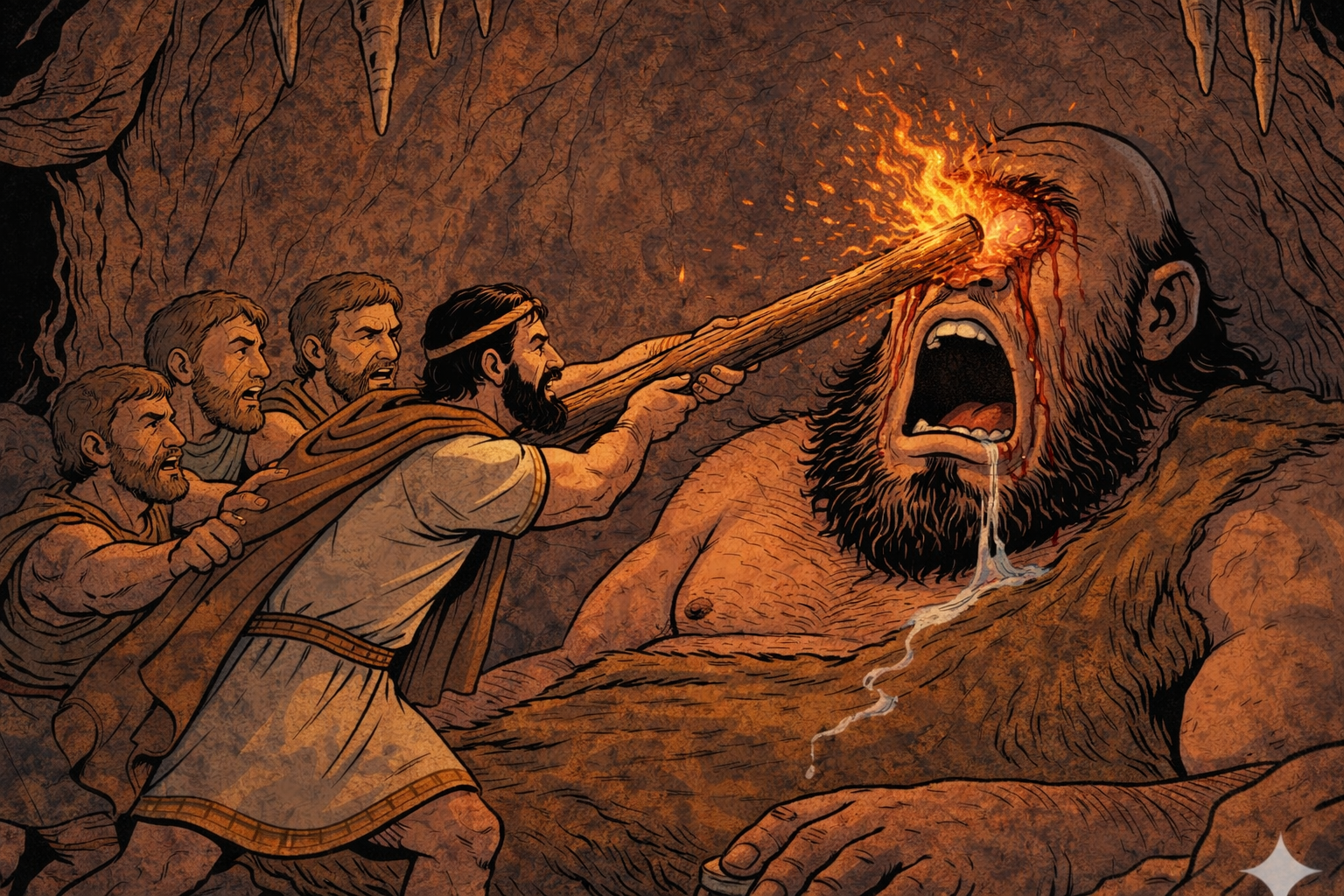
The art style is different from the one in previous panels, but I did not mind! I suspect I can fix that somehow. I was just very excited to see a scene like this generated by the AI without any stupid censor alarm going off. I am not sure what went wrong but I am glad it happened because this ended up one of the best-looking panels of today’s session. For God’s sake, there are streams of blood pouring out of his eye and that was allowed? Well, I am grateful anyway!
However, I think it was just a stroke of luck. A bit later, trying to generate the cyclopes that come to the entrance of the cave alerted by Polyphemus’ cries for help (Noman has tricked me!), I obtained this pretty lame picture:
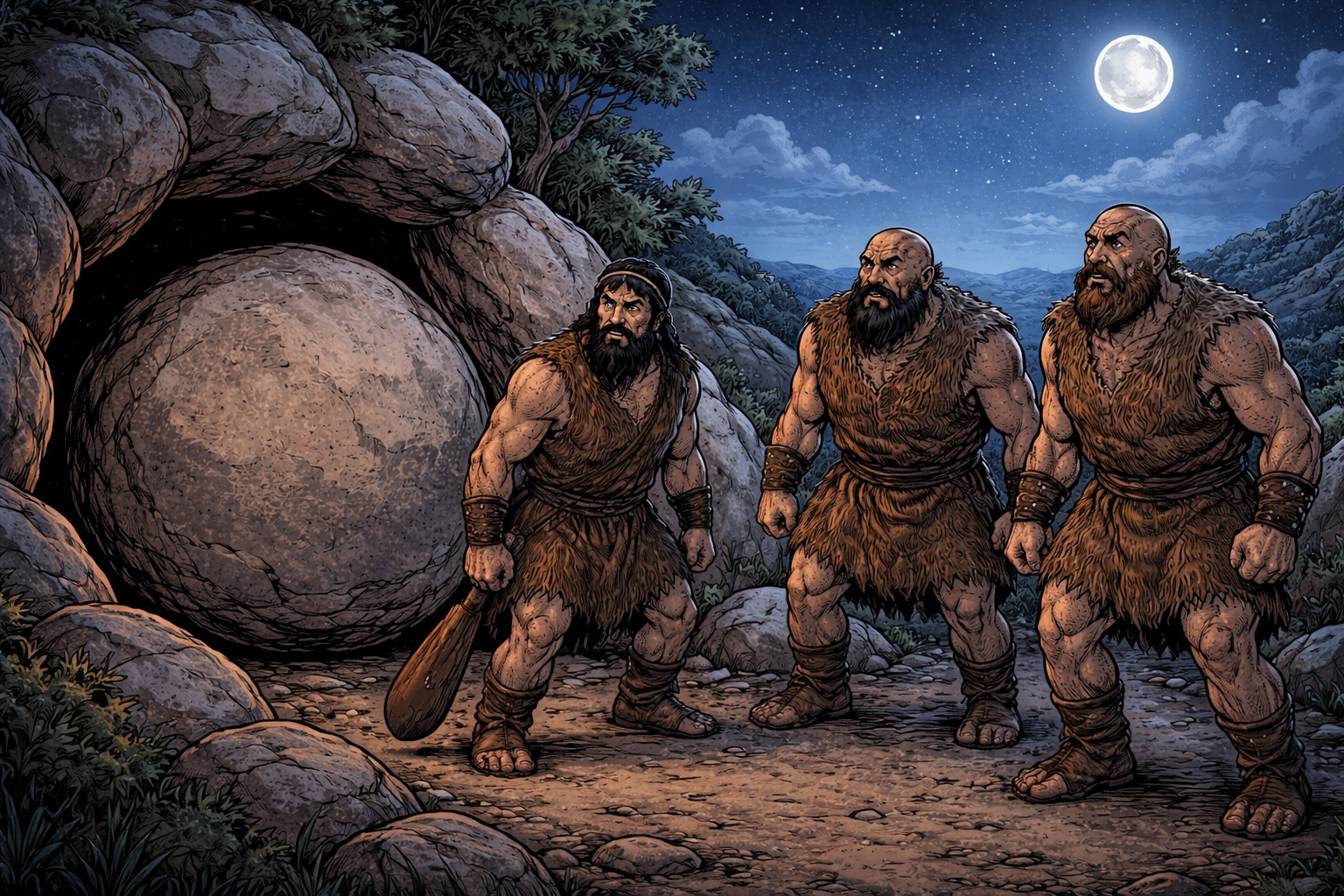
The art style is consistent with the style of the violent image but is now drifting too far from the first panels, which are my reference. Also, the cyclopes just look like troglodytes and they have two eyes. They are just big prehistoric men that don’t skip a single day at the gym. I did try to correct this by instructing ChatGPT to make them full-blooded cyclopes at the same time he adjusted the style.
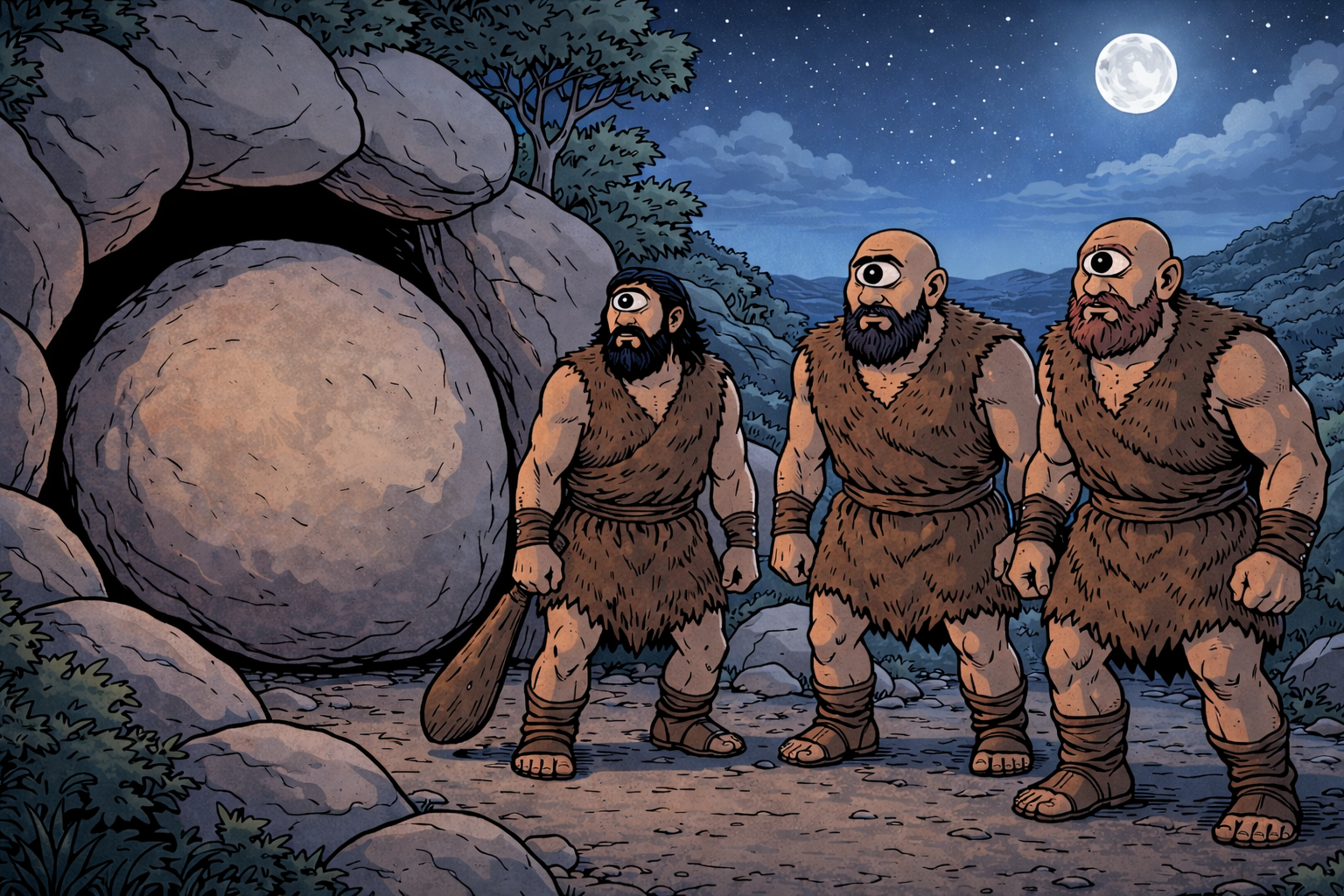 Which resulted in this image, which for some reason I just find quite funny. I do not think it is totally bad, but the eyes are disproportionately big, which makes it hilarious for some reason. When I tried to adjust the eye size, however, I got a censorship alert:
“It looks like I’m unable to generate the updated image because this request violates our content policies.”
Don’t ask me why. Apparently stabbing a big guy in the eye with a stake is ok, but making a cyclops’ eyes smaller is something that our society is not ready for. This was a sign for me to call it a day.
Some lessons from today
The comic is about 50% there. It probably still requires two more sessions (maybe 3). It won’t be perfect by any means, but I will stick to my new motto: better imperfect than unfinished.
A summary of the things I have learnt so far:
- Sketching is essential. It saves time in the end
- Use the right tool. Use a laptop for the prompts and image editing, the iPad only for the sketches.
- Local vs Global. Local changes are ok. Big changes in composition or relative size are not ok
- The 3-Round rule. If an image requires more than 3 rounds of improvement, it is probably because the sketch was not good enough
- Censorship is unpredictable: Sometimes you get lucky, sometimes you get blocked for trivial reasons.
Finishing the comic
2026-01-20 20:37
I continued working on the Polyphemus comic and I finished it. Frankly, I could have put in a couple more hours and had something semi-decent. The ending feels rushed and I decided to leave out the very last part of the story (where Ulysses reveals his real name). But, given that the goal was doing this just as a learning exercise, I decided to stop there. I made progress very slowly, but that’s ok.
To do this comic I had to learn some very basic concepts in Affinity, which is a tool I hadn’t worked with before. The general idea is making the images using AI (ChatGPT, Gemini) and then composing a full comic of several pages in Affinity, where I would also add any needed caption texts. I do see obvious problems with the comic, including mismatches between different panels, missing panels, some inconsistencies, etc. They annoy me but I decide to ignore them and move forward. Did you hear about the difference between what you can produce and your taste? Well, that’s the problem.
I want to take some minor notes so that I do not forget these simple lessons:
- Be structured: You do need to write a script, with information about every panel and the text that goes in each one of them. It seems obvious, right? Well, apparently it was not for me this time, and I jumped right into the image generation. So for the next time: be structured!
- Be consistent: Here I am thinking about consistency in terms of style. It is not easy but it is very important. I think that this comic is mostly there but still there are some mismatches between the art style of some of the panels.
- Be organized: I find myself generating a lot of different files: sketches, AI art, Affinity documents. It is important to give them some structure in folders. Use AirDrop to transfer files from the iPad to the Mac.
- Write the text first: I am doing it the other way around. I am picturing in my head what images make sense and then writing the text. Text must be written first
- Design the layout first: Also, it is much easier if I just put the panels with the right size and organization first and then I just add the images
- Transitions are important: I greatly underestimated the importance of small transition panels. I was focusing too much on great images (such as the one of the Cyclops arriving at the cave, or the one of the Cyclops touching the back of the sheep). The small transitions with different close-ups are what make the story readable. The language of comics seems to be similar to the language of cinema.
The full comic is here: